
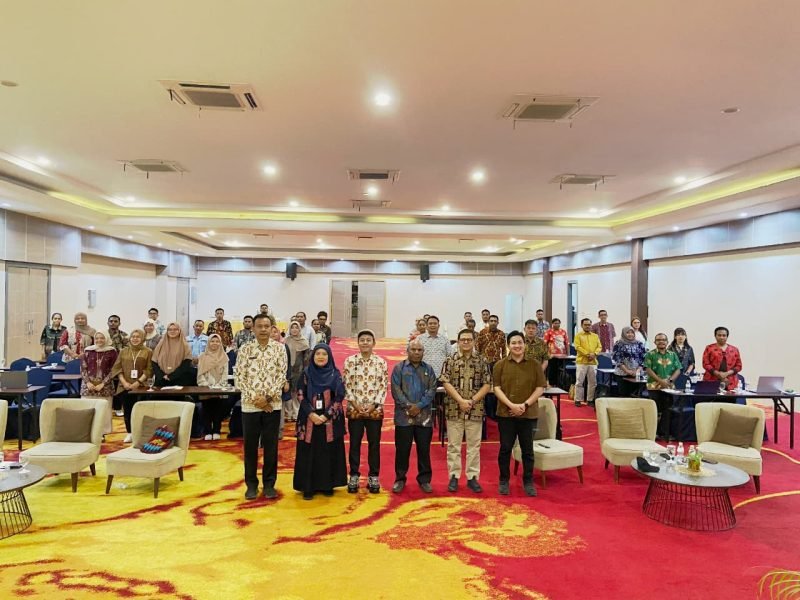
The Ministry of Villages and Development of Disadvantaged Regions (Kemendes PDT), in collaboration with the International Fund for Agricultural Development (IFAD), a United Nations agency, and the Kitong Bisa Foundation (KBF), has officially launched the Integrated Village Economic Transformation Program (TEKAD) in Papua. This program targets hundreds of families in four districts to improve their household economic capacity through entrepreneurship training, intensive mentoring, and local potential development.
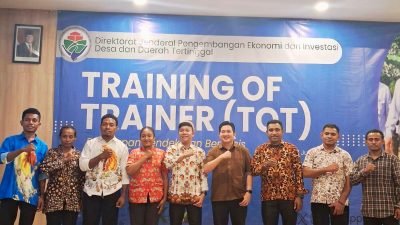
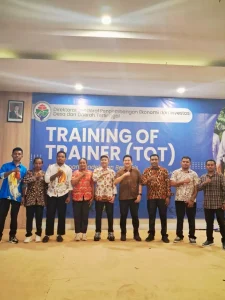
The program launch took place at the Suni Sentani Hotel, Jayapura Regency, Thursday (July 9), as a strategic step to strengthen the capacity of facilitators and implementing partners before community mentoring begins in mid-July to September 2026.
This collaborative program aims to improve the welfare of village communities by strengthening family capacity, economic empowerment, and developing local potential in an inclusive and sustainable manner.
Through the Household-Based Approach (PBRT), communities are encouraged to become key actors in village development. Each family will receive assistance in developing household economic plans, improving skills, and developing businesses aligned with regional potential. The program will be implemented in Jayapura, Keerom, Sarmi, and the Yapen Islands Regencies.
Facilitator training will take place from July 8–11, 2026, as the initial phase of TEKAD implementation. Following completion of the training, facilitators will conduct outreach and direct mentoring with target households for three months.
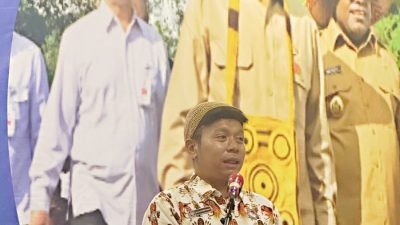
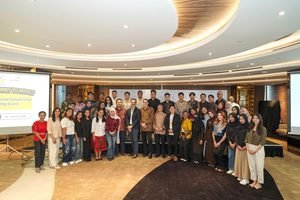
The opening ceremony was attended by Dr. H. Tabrani, M.Pd., Director General of Economic Development and Investment for Villages and Disadvantaged Regions, Dra. Dewi Yuliani, MP, Director of Superior Product Development for Villages and Disadvantaged Regions and Project Manager of the TEKAD Program; Dr. Abdul Rahman Basri, S.Sos., M.KP, Assistant II for Economic and Development Affairs of the Jayapura Regency Regional Secretariat; Dr. (Cand.) Billy Mambrasar, ST, B.Sc., Ed.M., MBA, Brigadier General TNI (Ret.) Dr. Yusuf, S.Sos., MM, Project Management Advisor of the TEKAD Program; Teben Gurik, S.Sos., Acting Head of the Community and Village Empowerment Service of Jayapura Regency; and Mohamad Afif Dzulqifli, CEO of Kitong Bisa Foundation.
Meanwhile, the Director General of Economic Development and Investment for Villages and Disadvantaged Regions, Dr. H. Tabrani, M.Pd., opened the online event and emphasized the government’s support for improving the quality of human resources in the implementation of the TEKAD Program.
The Director of Superior Product Development for Villages and Disadvantaged Regions and Project Manager of the TEKAD Program, Dra. Dewi Yuliani, MP, emphasized that this training is an important foundation for all facilitators to have a common understanding in implementing the Household-Based Approach in the field.
‘We hope that women’s involvement in every stage of development will be strengthened and supported by a culture that provides space for women to play a role in decision-making in villages and communities.’
The PBRT (Regional Development Planning) is designed as a guideline for empowering poor households through strengthening family capacity, developing household economic plans, and integrating them with village development. This approach also strengthens the capacity of facilitators, village institutions, inter-family social learning, and a participatory monitoring system to ensure sustainable change.
On the same occasion, Dr. (Cand.) Billy Mambrasar, ST, B.Sc., Ed.M., MBA emphasized the importance of improving the quality of women’s education as one of the keys to accelerating family welfare.
‘Households will thrive if women receive higher education. Field findings like these provide important input for the central and regional governments in formulating more targeted policies.’
The TEKAD program comes amidst persistently high poverty levels in Papua. According to data from the Central Statistics Agency (BPS), the poverty rate in March 2025 reached 19.16% in Papua Province, 19.71% in South Papua, 28.90% in Central Papua, and 30.03% in Highland Papua, far above the national average of 8.47%.
This situation is the primary reason TEKAD focuses its support on poor and vulnerable families who still have the potential to develop. This program involves all family members—father, mother, and children—so that economic transformation begins at the household level.
The TEKAD program partners with the Kitong Bisa Foundation. Nineteen field facilitators will assist with the implementation of PBRT in Jayapura, Keerom, Sarmi, and the Yapen Islands regencies.
Kitong Bisa Foundation CEO, Mohamad Afif Dzulqifli, hopes that all facilitators will be able to build strong relationships with the community so that the program’s objectives can be optimally achieved.
‘We hope the facilitators will be able to provide tangible benefits, build a positive approach to the community, and support each target household to achieve our shared goals.’
During the four-day training, participants received material on PBRT methodology, preparing family action plans, strengthening the capacity of facilitators, simulating outreach to village communities, and monitoring and evaluating implementation.
Through the TEKAD Program, the Ministry of Villages, Development of Disadvantaged Regions and Transmigration (Kemendes PDT), together with IFAD and the Kitong Bisa Foundation, affirmed their commitment to accelerating village economic transformation by strengthening families as the foundation of development. This approach is expected to create more independent, resilient, and prosperous village communities, while simultaneously strengthening economic development in Papua.